Are “Boneless Wings” Misleading? Federal Court Says No.


Are “Boneless Wings” Misleading? Federal Court Says No.
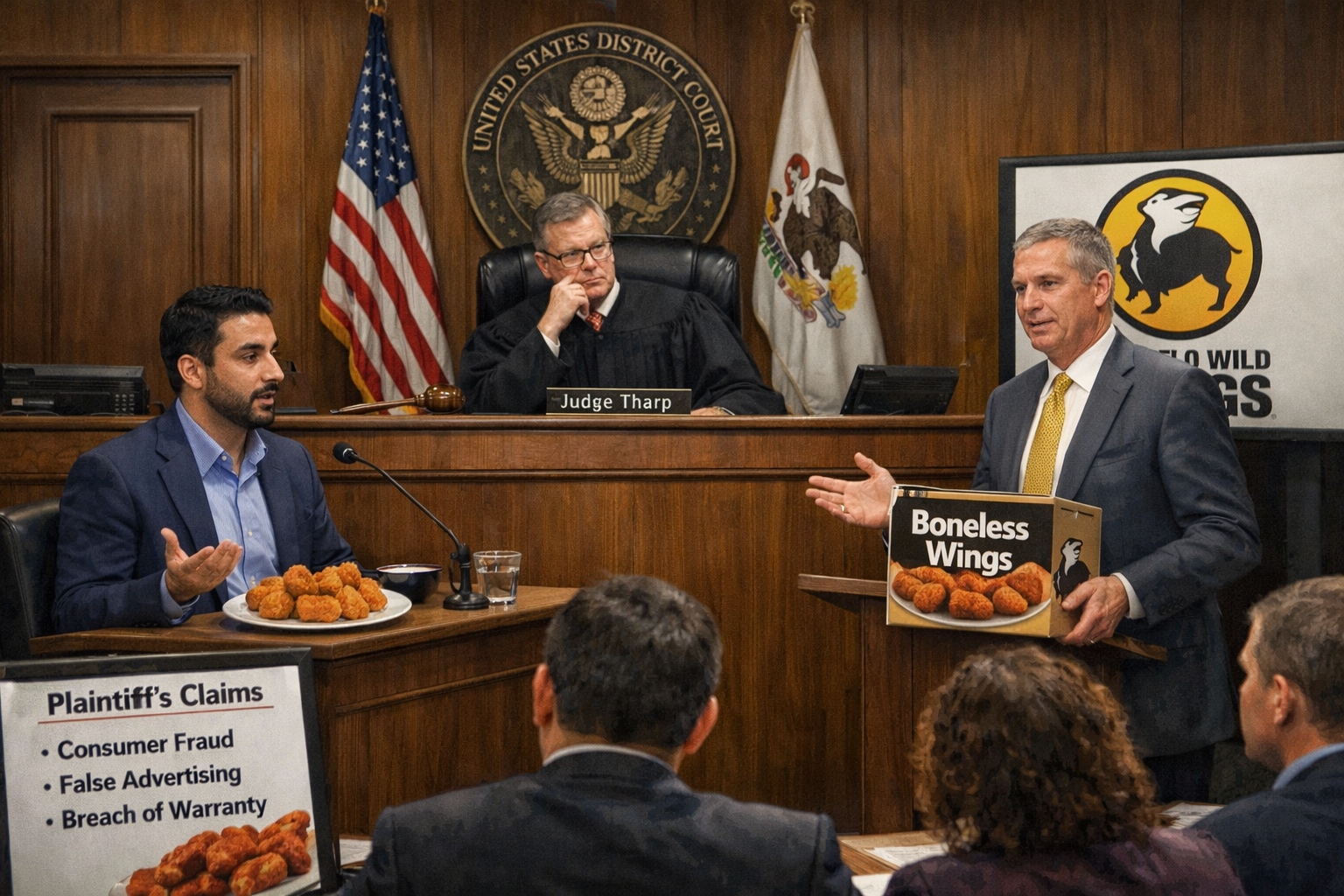
In Halim v. Buffalo Wild Wings, Inc. (N.D. Ill. Feb. 17, 2026), a federal judge dismissed a proposed class action claiming that Buffalo Wild Wings misled customers by selling “boneless wings” that are actually made from chicken breast meat rather than deboned wing meat.
The plaintiff argued that he believed he was purchasing real chicken wings with the bones removed. He brought claims under the Illinois Consumer Fraud Act, as well as for fraud, breach of warranty, and unjust enrichment, alleging he would have paid less—or not purchased the product at all—had he known the truth. The court held that the plaintiff did have standing because alleging economic loss (spending money he otherwise wouldn’t have spent) is enough at the pleading stage.
However, the case ultimately failed on the merits.Applying the “reasonable consumer” standard, the court concluded that no reasonable person would interpret “boneless wings” literally. The judge compared the term to “chicken fingers” and “cauliflower wings,” noting that such names are commonly understood as descriptive or fanciful—not literal anatomical claims. The court also pointed out that boneless wings have been sold for decades and are typically priced differently than traditional wings. Because the term was not deceptive as a matter of law, all claims were dismissed. The plaintiff was given an opportunity to amend, though the court expressed skepticism that the defect could be cured.
Takeaway: Courts continue to apply a common-sense “reasonable consumer” lens in food-labeling cases. Creative naming alone isn’t fraud—especially when the product description reflects common marketplace usage.